Egg Whites vs. Whole Eggs for Muscle Gain: Which Actually Builds More Muscle?
Bodybuilders have argued over egg whites versus whole eggs for decades. We dig into the muscle protein synthesis research, nutrient comparison, and calorie math to settle which option truly supports muscle growth better.

Table of Content
Introduction
Picture the classic image of a bodybuilder's breakfast: a mountain of egg whites, yolks discarded, all in the name of maximizing protein while minimizing fat and cholesterol. This habit has been passed down through gym culture for decades, but modern research on muscle protein synthesis tells a more interesting story than "yolks are just extra calories to avoid."
This guide compares egg whites and whole eggs across protein quality, muscle-building research, and calorie efficiency, so you can decide which fits your specific bulking or cutting goals.
Comparison Overview
| Nutrient (per large egg) | Egg White Only | Whole Egg | Difference |
|---|---|---|---|
| Calories | ~17 kcal | ~72 kcal | Whole egg has ~55 more kcal |
| Protein | ~3.6g | ~6.3g | Whole egg has ~2.7g more protein |
| Fat | ~0g | ~5g | All fat is in the yolk |
| Cholesterol | 0mg | ~185mg | Entirely from the yolk |
| Vitamin D | 0 IU | ~41 IU | Only present in the yolk |
| Choline | ~0mg | ~147mg | Nearly all choline is in the yolk |
Evaluation Criteria
- Protein content and completeness of amino acid profile
- Muscle protein synthesis response after resistance training
- Micronutrient contribution, especially from the yolk
- Calorie efficiency for cutting versus bulking
- Practicality for high-volume egg consumption
- Cardiovascular considerations for cholesterol-sensitive individuals
Egg Whites: Maximum Protein Efficiency

Overview
Egg whites deliver about 3.6 grams of protein for just 17 calories, with essentially zero fat. This makes them the most calorie-efficient way to add protein volume to a meal, which is exactly why generations of bodybuilders have relied on them, particularly during calorie-restricted cutting phases when every gram of protein needs to come with as few extra calories as possible.
Key Features
- Best protein-to-calorie ratio of the two options
- Higher leucine content per calorie than whole eggs
- Zero fat and zero cholesterol
- Complete protein containing all nine essential amino acids
| Pros | Cons |
|---|---|
|
|
Use Cases
Cutting Phase Protein Boost
Egg whites let you hit high daily protein targets without spending your limited calorie budget on fat.
- Use pre-packaged liquid egg whites to save prep time
- Combine with a whole egg or two for balanced micronutrients
- Track total protein precisely with Macro Tracking AI's macro tracking
Liquid Egg Whites for Convenience
Pre-packaged liquid egg white products deliver the same protein content as fresh-separated whites without the time cost of manual separation, making high egg-white intake far more practical daily.
- Keep a carton on hand for quick omelets or protein-boosted smoothies
- Check the label for added sodium or preservatives across different brands
- Combine with one whole egg cracked fresh to reintroduce some yolk nutrients
Verdict
Egg whites remain an excellent, highly efficient protein source, particularly during a cutting phase, even though they lack the yolk's muscle-building extras.
Whole Eggs: The Muscle-Building Research Favorite
Overview
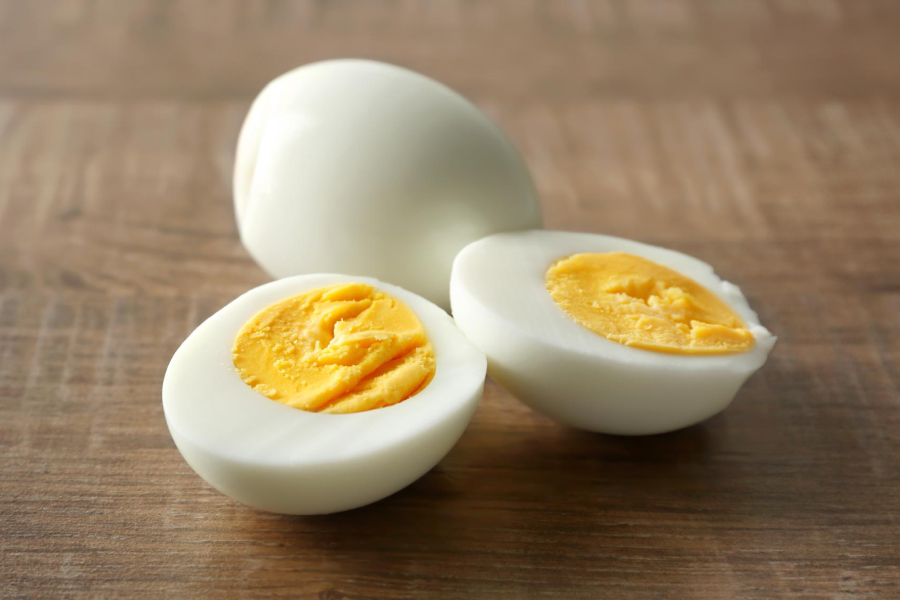
A whole egg contains about 6 grams of protein and 5 grams of fat for roughly 72 calories, with nearly all of its micronutrient value — choline, vitamin D, B12, and cholesterol — concentrated in the yolk. Research comparing muscle protein synthesis has found that whole eggs stimulate a measurably greater muscle-building response after resistance exercise than an equivalent amount of protein from egg whites alone, suggesting the yolk's fat and micronutrients enhance how effectively the body uses the protein.
Key Features
- Greater muscle protein synthesis response in research versus whites alone
- Contains choline, vitamin D, B12, and cholesterol from the yolk
- Cholesterol serves as a precursor for testosterone synthesis
- More naturally satiating due to fat content
| Pros | Cons |
|---|---|
|
|
Use Cases
Muscle-Building Meal Base
For most people focused on muscle gain without extreme calorie restriction, whole eggs provide superior muscle-building signaling per the available research.
- Combine 2-3 whole eggs with extra egg whites to boost total protein
- Pair with complex carbs for a complete post-workout meal
- Log mixed preparations accurately with Macro Tracking AI's AI food recognition
High-Volume Egg Eaters
For anyone eating six or more eggs' worth of protein daily, a deliberate whole-egg-to-egg-white ratio balances the research-backed muscle benefits of the yolk with manageable total calories and cholesterol.
- Try 3 whole eggs plus 4 additional egg whites for roughly 34g of protein at moderate calories
- Get a lipid panel checked periodically if eating multiple whole eggs daily long-term
- Adjust the whole-egg-to-white ratio based on your current bulking or cutting phase
Verdict
Whole eggs appear to support muscle protein synthesis at least as well as, and by some measures better than, an equivalent amount of protein from egg whites alone, thanks to the yolk's fat and micronutrient content.
Summary
Finding Your Ideal Egg Ratio with Macro Tracking AI
Rather than choosing one extreme, most people benefit from a deliberate mix tailored to their current phase of training.
| Goal | Best Choice | Why? |
|---|---|---|
| Aggressive cutting phase | Egg whites (or a mix) | Higher protein per calorie, keeps total intake low |
| General muscle building | Whole eggs | Research shows greater muscle protein synthesis response |
| High daily egg volume | Mix of both | Balances yolk nutrients with manageable calories |
| Cholesterol management | More egg whites | Removes dietary cholesterol from the yolk |
| Hormone support | Whole eggs | Yolk cholesterol and fat support testosterone production |
Because mixed whole-egg-and-egg-white preparations are harder to estimate accurately than a single ingredient, logging them with Macro Tracking AI's AI food recognition removes the guesswork entirely.
The Amino Acid Angle: Leucine vs. Overall Nutrient Synergy
Both egg whites and whole eggs qualify as complete proteins, containing all nine essential amino acids. Where they differ is leucine content relative to calories — the specific amino acid most directly responsible for triggering muscle protein synthesis. Because egg whites are almost entirely protein with no fat diluting the calorie count, they actually deliver more leucine per calorie than whole eggs. This is part of why egg whites remain excellent on their own merits, even though the research favoring whole eggs suggests the yolk's fat and micronutrients provide an additional benefit to how effectively the body uses that protein, beyond amino acids alone.
| Goal | Best Choice | Why? |
|---|---|---|
| Aggressive cutting phase | Egg whites (or a mix) | Higher protein per calorie, keeps total intake low |
| General muscle building | Whole eggs | Research shows greater muscle protein synthesis response |
| High daily egg volume | Mix of both | Balances yolk nutrients with manageable calories |
| Cholesterol management | More egg whites | Removes dietary cholesterol from the yolk |
| Hormone support | Whole eggs | Yolk cholesterol and fat support testosterone production |
Conclusion
Contrary to decades of gym tradition, whole eggs appear to support muscle protein synthesis at least as well as, and by some research measures better than, an equivalent amount of protein from egg whites alone — largely thanks to the yolk's fat, cholesterol, and micronutrient content.
Egg whites remain an excellent, highly efficient protein source, particularly useful during a calorie-restricted cutting phase. For most people focused on building muscle without extreme dieting, a mix of whole eggs and additional egg whites offers the best combination of muscle-building benefit and calorie control.
"The yolk isn't just extra calories to avoid — it may be doing real work for your muscle-building results that the whites alone can't replicate."
Related Articles
Whole Eggs vs. Egg Whites vs. Cottage Cheese: Best High-Protein Breakfast for Fat Loss?
Uncover the ultimate high-protein breakfast for fat loss by comparing whole eggs, egg whites, and cottage cheese. This detailed guide breaks down their nutritional benefits, satiety levels, and how each fits into a successful fat loss strategy.
Whey vs. Plant Protein: Which Builds Muscle More Efficiently?
Dive into the ultimate protein showdown: Whey vs. Plant Protein. Discover which type of protein is more efficient for muscle building, explore their unique benefits, and learn how to optimize your intake for peak performance.

Can You Gain Muscle in a Calorie Deficit? The Science, Strategy, Smart Tracking
Is it possible to build muscle while losing fat? Discover how you can gain muscle in a calorie deficit with the right protein, workouts, and tools. Learn about macros, calculators, and real-world tips to succeed.
Start Your Health Journey Today
Download Macro Tracking AI and take control of your nutrition with the power of artificial intelligence.